What Can Zohran Accomplish?
What distinguishes Zohran Mamdani’s socialism is not its aims. It’s his willingness to take seriously the problem of how to get there.
What distinguishes Zohran Mamdani’s socialism is not its aims. It’s his willingness to take seriously the problem of how to get there.
An interview with Jeffrey Wasserstrom, author of The Milk Tea Alliance.

The task of this moment is to build a broad front that can resist authoritarianism. The recent protests are early skirmishes in the fight that will be needed.
To understand everything that happens in Latin America in relation to the United States is to brush aside inconvenient details in favor of a morality play.

The late Uruguayan president had an unmatched connection with popular sectors and the courage of his enduring convictions.
Trump’s National Garden of American Heroes will be a monument to randomness and a lazy, perhaps unthinking, version of the ideology he is supposed to despise.

The U.S. government is activating a suite of algorithmic surveillance tools, developed in concert with major tech companies, to monitor and criminalize immigrants’ speech.
An interview with Quinn Slobodian, the author of Hayek’s Bastards: Race, Gold, IQ, and the Capitalism of the Far Right.
The government funds institutions that stretch across American society. The Trump administration is demanding the relinquishment of constitutional rights to keep the money flowing.
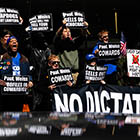
By intimidating and disarming potential sources of legal resistance, Trump weakens one of the last institutional barriers standing between his administration and unbridled executive power.
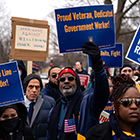
Trump has destroyed a federal system of labor relations that helped contain conflict for decades. The move could have unintended consequences.
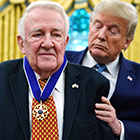
The administration is attempting to incapacitate the redistributive and social protective arms of the state, while exploiting its vast bureaucratic powers to silence, threaten, and deport.
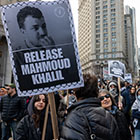
If the secretary of state can simply declare a legal permanent resident deportable based on their constitutionally protected activities, the First Amendment no longer applies to noncitizens.
There will surely be turf wars and palace intrigue within the administration, but there is little reason to think that its core figures will fracture in the pursuit of their basic goal: to break the twentieth-century state.
An interview with Jessica Pishko, author of The Highest Law in the Land.